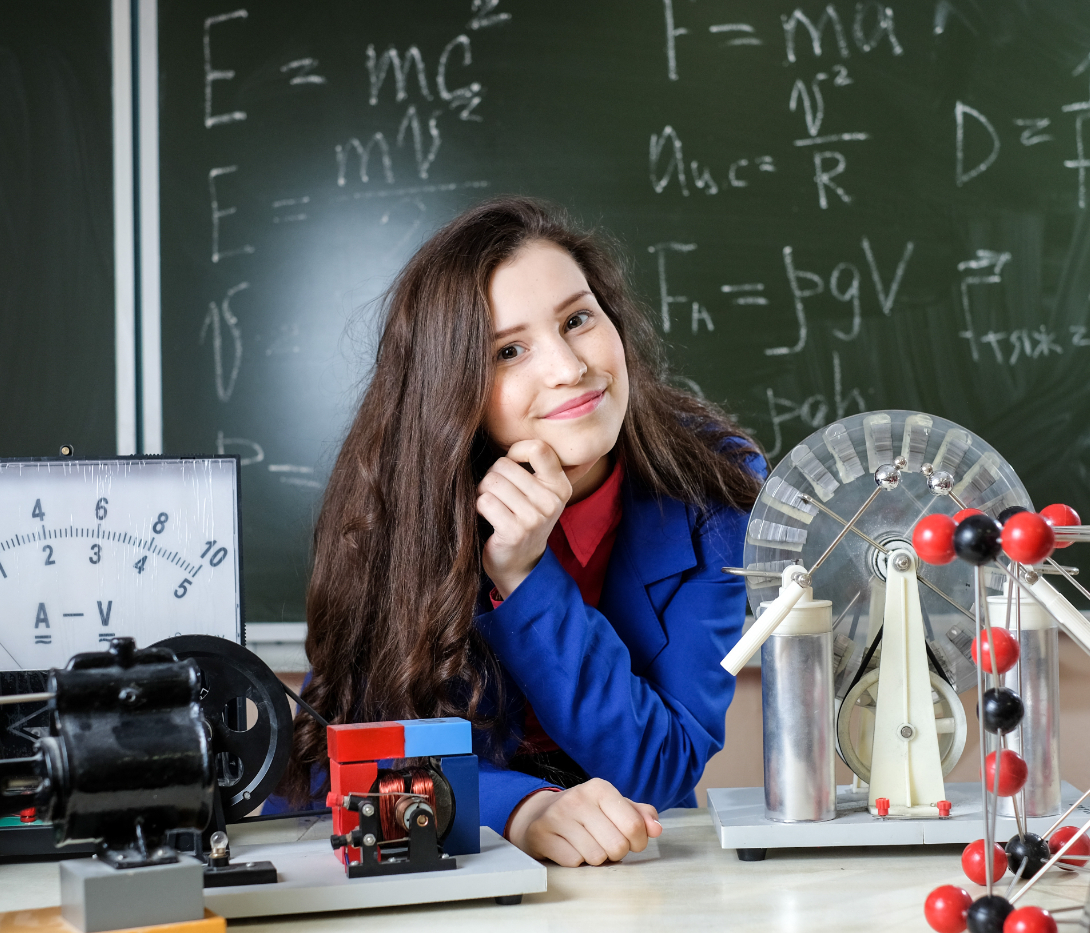
Applications of GCSE physics
An engaging tour of how GCSE Physics topics explain everyday technology and real-world phenomena, revealing the science behind everything from smartphones and cars to space and climate.
Talk: Yes | Workshop: Yes | Course: No | Audience: High School
GCSE Physics is your gateway to understanding how the world really works, from the tiniest circuits in your phone to the biggest forces shaping the universe, and in this talk we’ll explore how every topic on the course connects to exciting, meaningful real-life applications. We’ll start with energy (stores, transfers, efficiency) to see how engineers design better batteries, greener homes and renewable power systems, then dive into electricity—circuits, power and the national grid—revealing the physics behind chargers, electric cars and why energy loss matters. Particle model of matter and thermal physics explain heating systems, refrigeration, engines and even climate science, while atomic structure introduces radiation and half-life, linking physics to cancer treatment, smoke alarms and dating ancient artefacts. In forces and motion, we’ll unpack speed, acceleration, momentum and braking distance—the key ideas behind car safety, sport science and crash investigations—before exploring pressure in hydraulics, diving and weather systems. Waves bring the syllabus to life with sound and light, reflection and refraction, diffraction and the electromagnetic spectrum, showing how Wi-Fi, microwave cooking, X-rays, lasers and fibre optics all rely on the same core principles. We’ll also look at magnetism and electromagnetism, the hidden physics behind motors, generators, loudspeakers, MRI scanners and sustainable electricity generation. Finally, we’ll zoom out with space physics (or astronomy depending on your course), connecting gravity and orbital motion to satellites, GPS, space exploration and the life cycle of stars. By the end, GCSE Physics won’t feel like separate chapters—it’ll feel like a powerful toolkit for understanding (and improving) the future.