HERMES jet engine vibration experiment
A unique facility for isolating, measuring, and understanding how vibrations travel through aircraft engine structures.
Hermes—the Helicopter Excitation and Measurement System—is a unique experimental facility in the Structural Dynamics Lab at Imperial College London, created to understand how vibrations move through jet engine structures. Funded by Rolls-Royce, Hermes focuses on the structural behaviour of engines: how vibrations originate, how they are transmitted, and how they affect performance, durability, and safety.
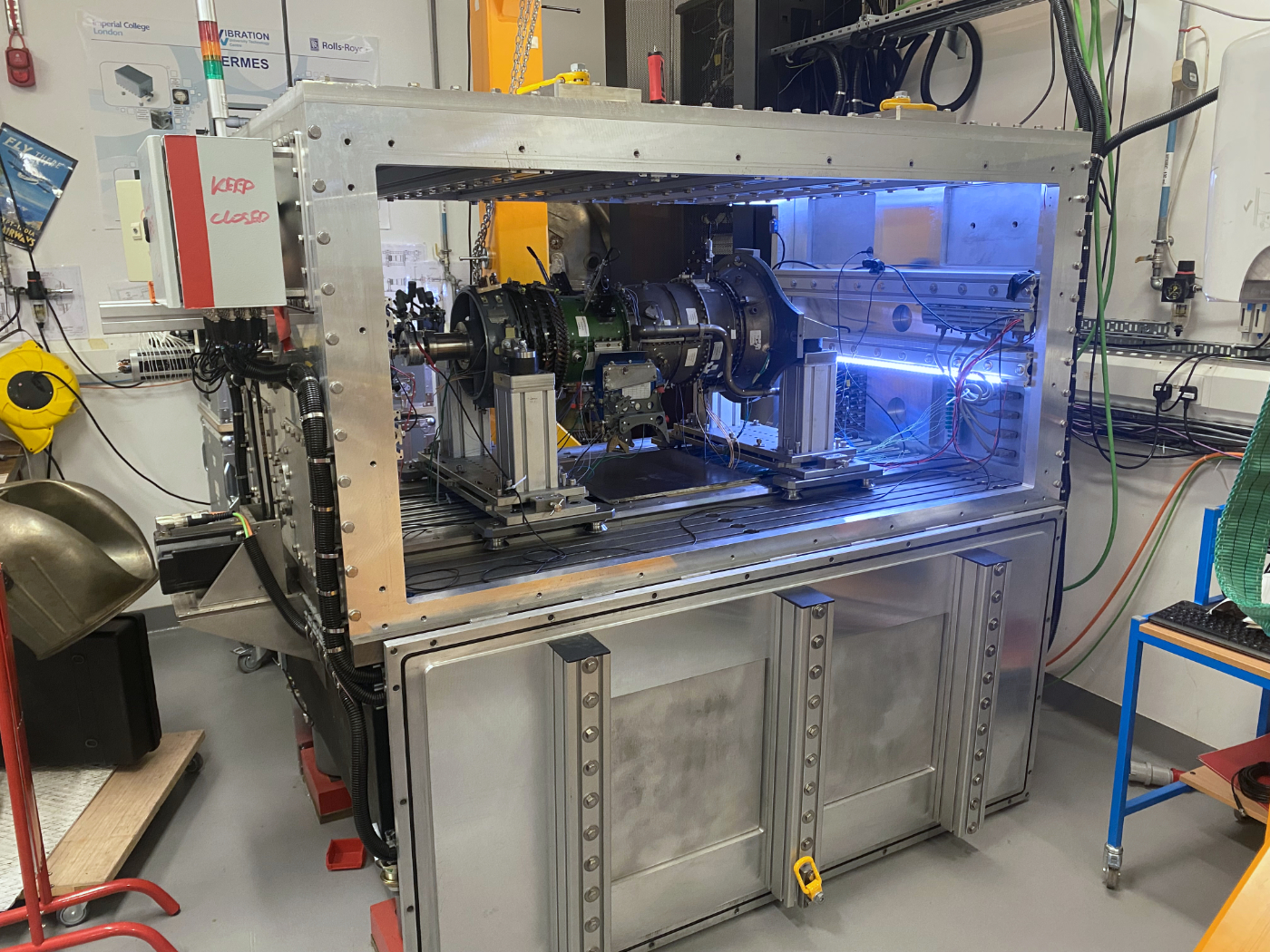
At the centre of the facility is a Rolls-Royce Gnome helicopter engine mounted inside an aluminium vacuum chamber. The engine is heavily instrumented with over 150 sensors measuring acceleration, strain, displacement, and temperature. Together, these measurements provide a detailed, high-fidelity picture of the engine’s dynamic behaviour, enabling insights that support the design of quieter, more reliable, and longer-lasting aircraft engines.
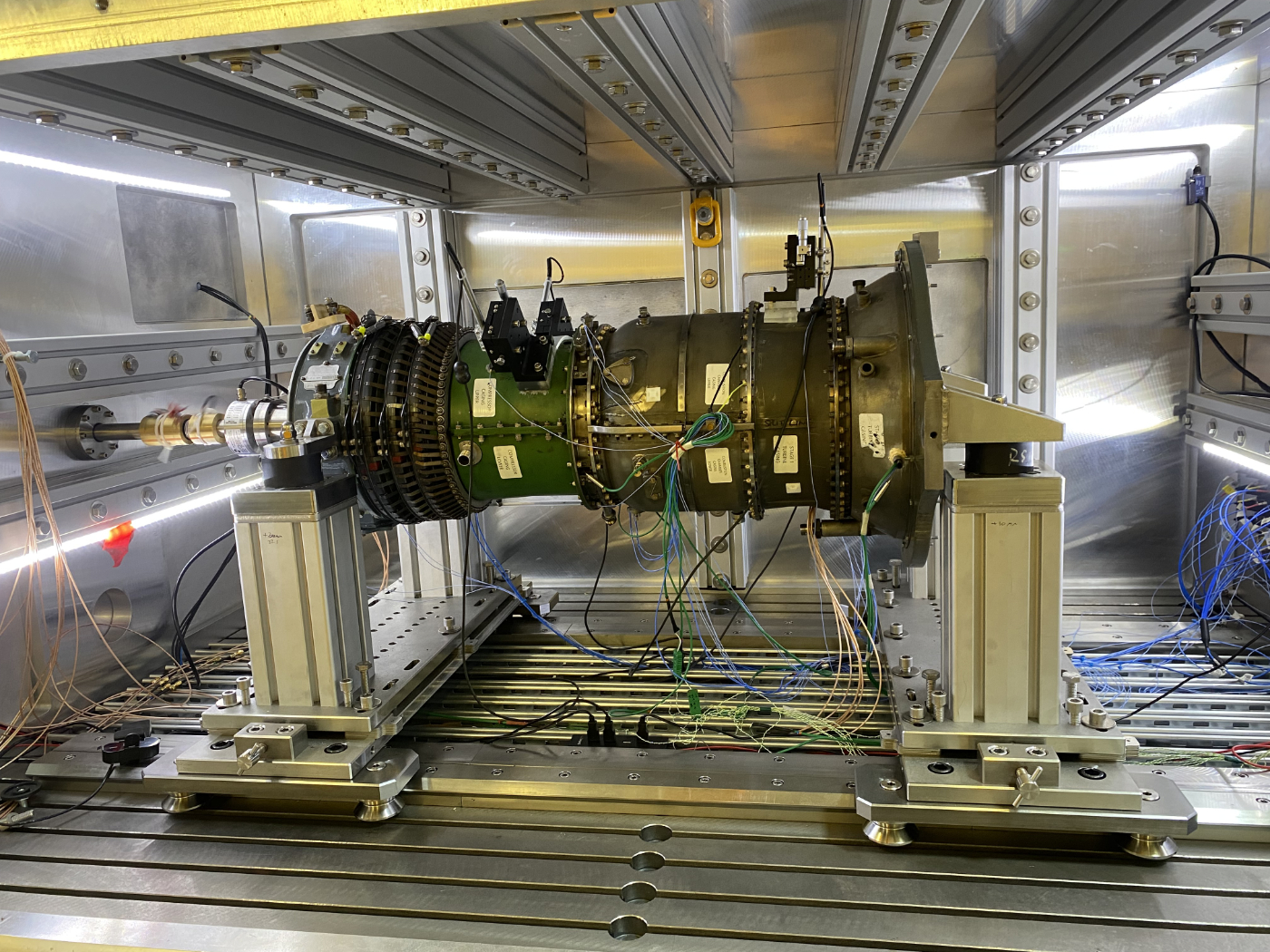
The key motivation behind Hermes is isolation. Unlike conventional engine tests, the goal here is not to study aerodynamics or combustion, but purely structural vibration. To achieve this, the engine is housed inside a large vacuum chamber, removing aerodynamic effects, and is driven by an electric motor rather than fuel.
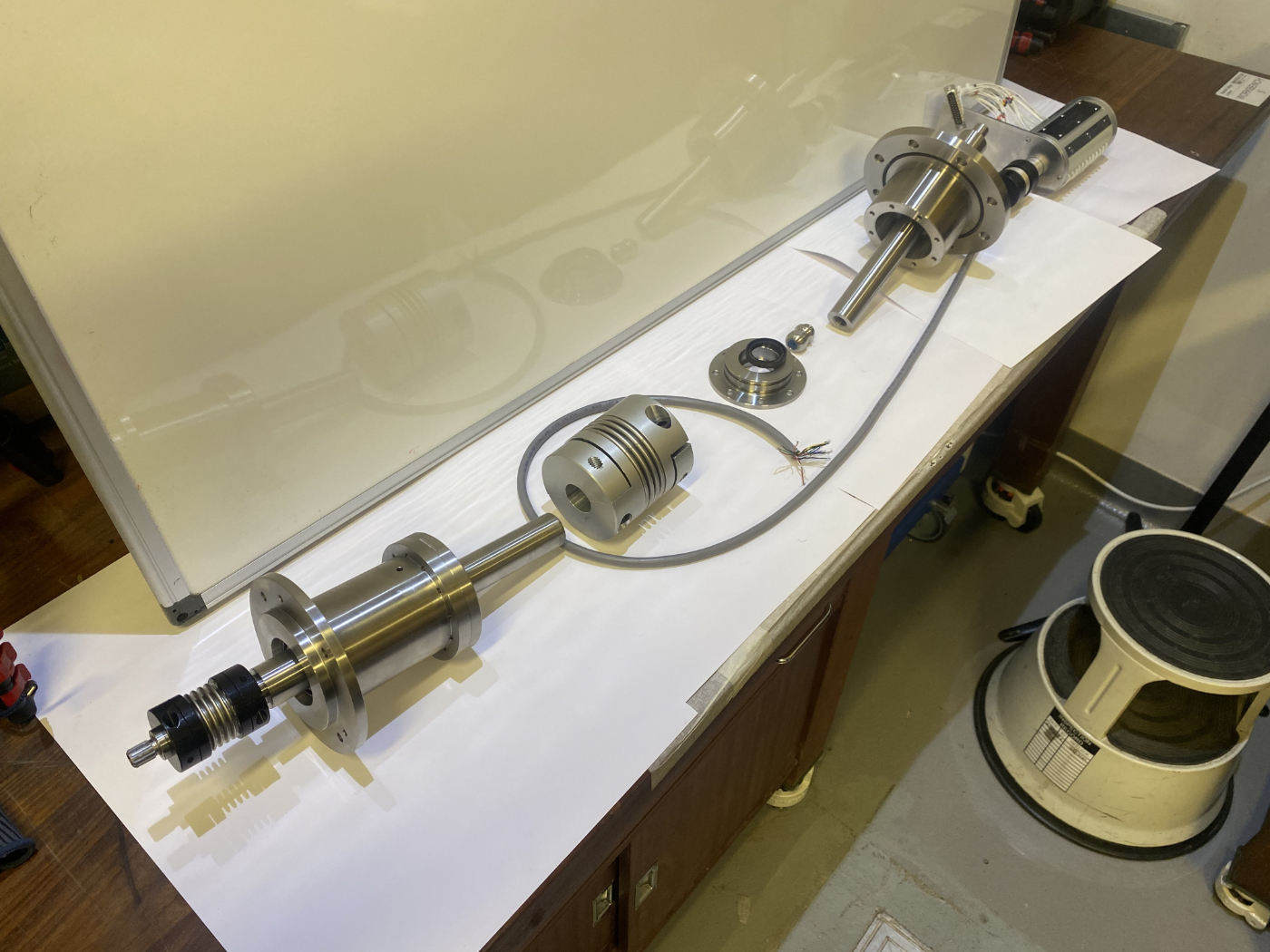
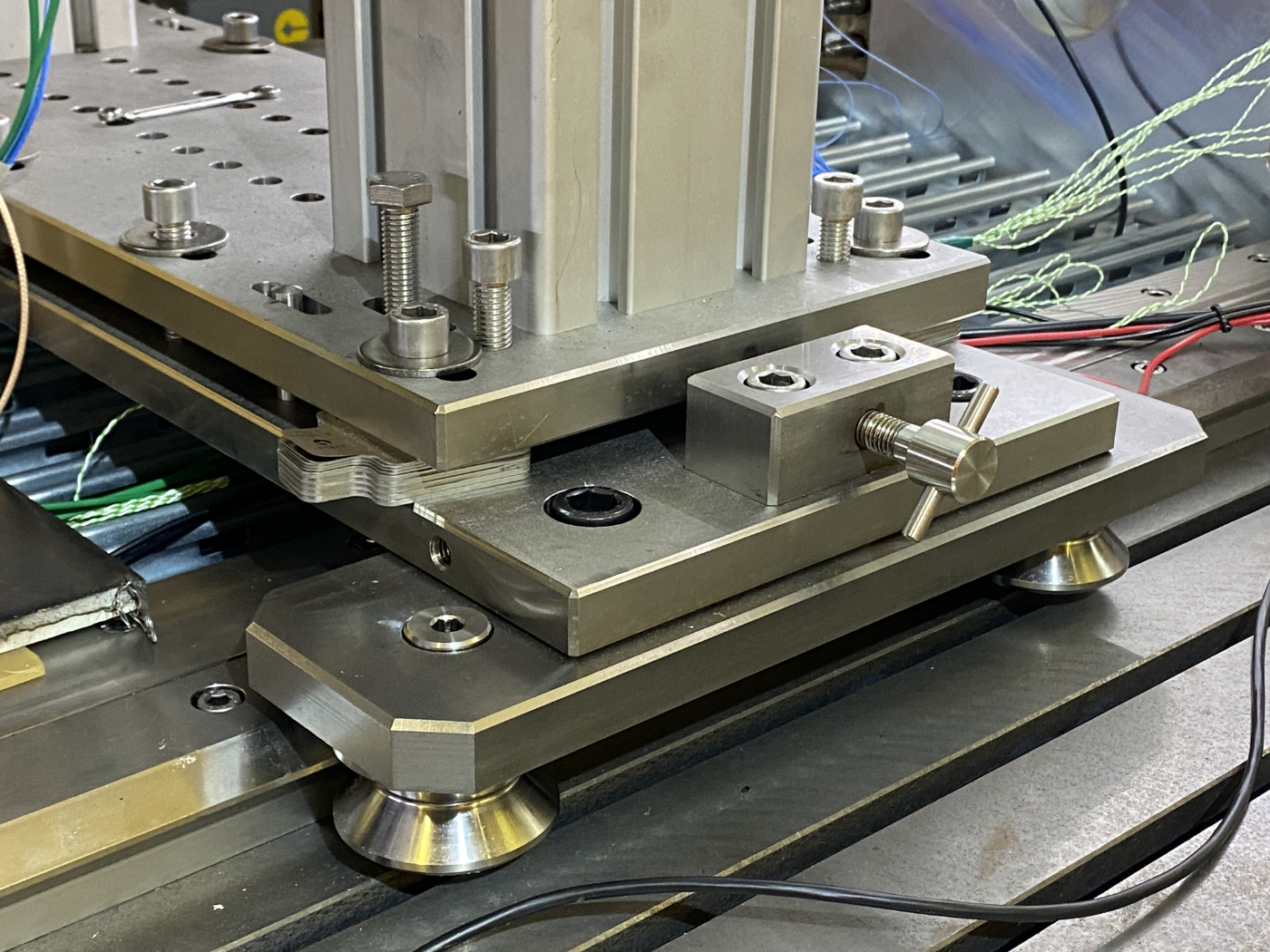
This controlled setup allows researchers to study how vibrations travel through critical components such as the rotor shaft, bearings, casings, and flanges, without interference from fluid mechanics.
Keywords: Vibration, structural dynamics, rolls royce, jet engine