Shelly the turtle robot
A realistic sea turtle robot designed for validation of plesiosaur swimming experiments.
Shelly is a lifelike sea turtle robot built to validate Dr Luke Muscutt’s experiments on plesiosaur swimming. Because plesiosaurs are extinct, we can’t directly observe their motion or measure their performance in the water—so the research needs a living benchmark. Sea turtles are one of the few animals that swim using underwater flight, the same lift-based propulsion mechanism proposed for plesiosaurs. By starting with an animal we can study, Shelly provides a crucial reality check for the assumptions that underpin robotic reconstructions of prehistoric swimming.
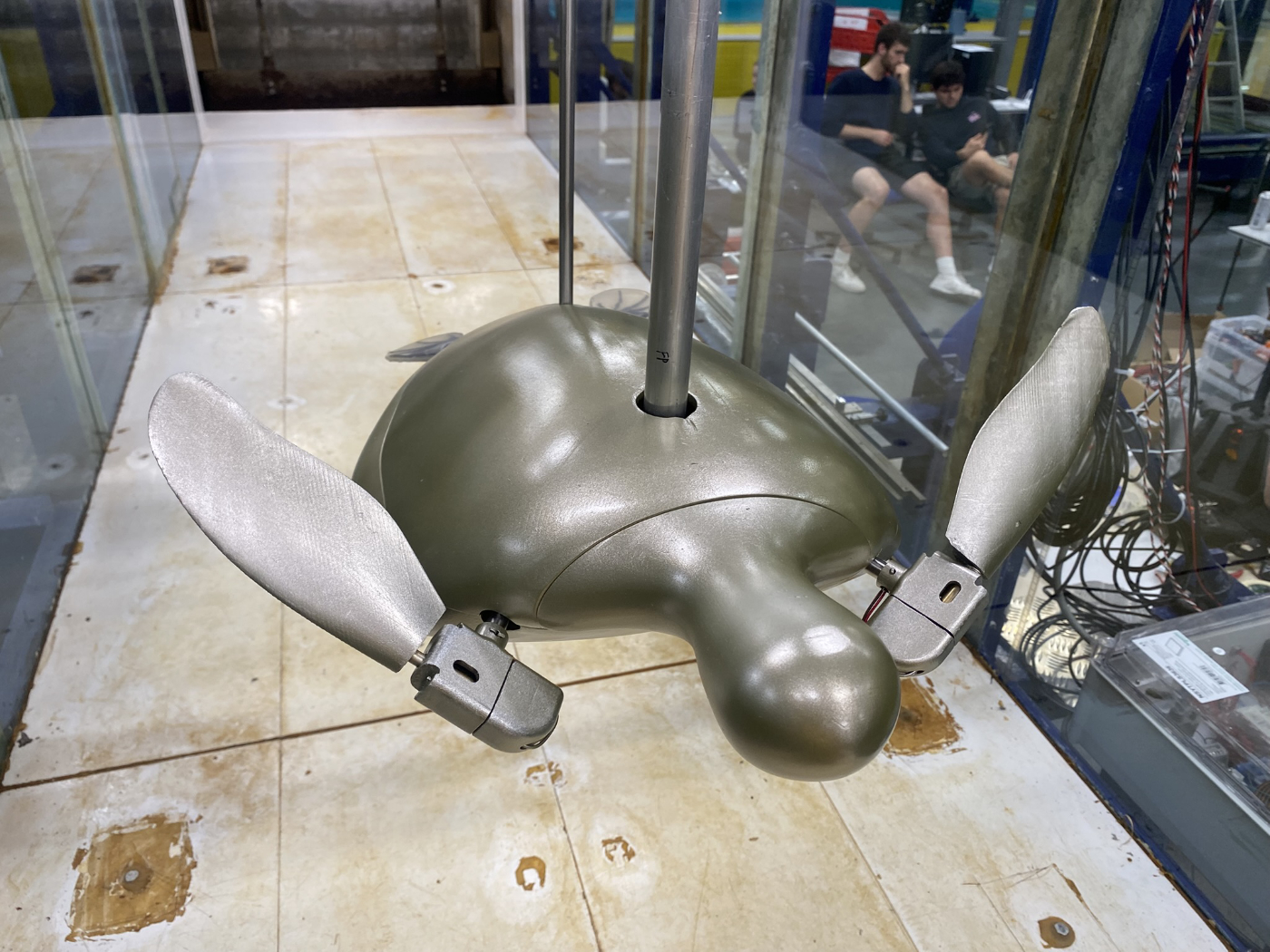
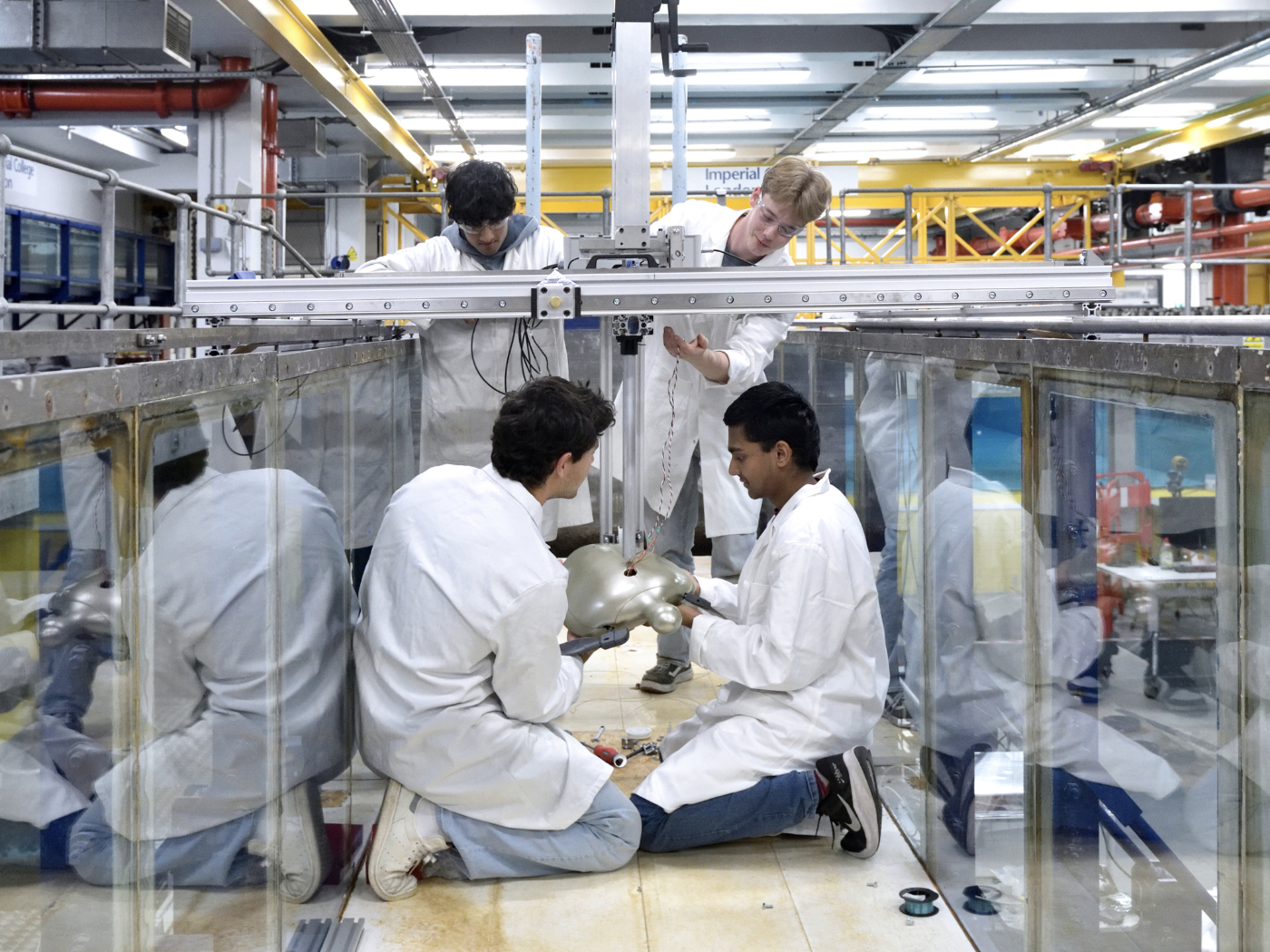
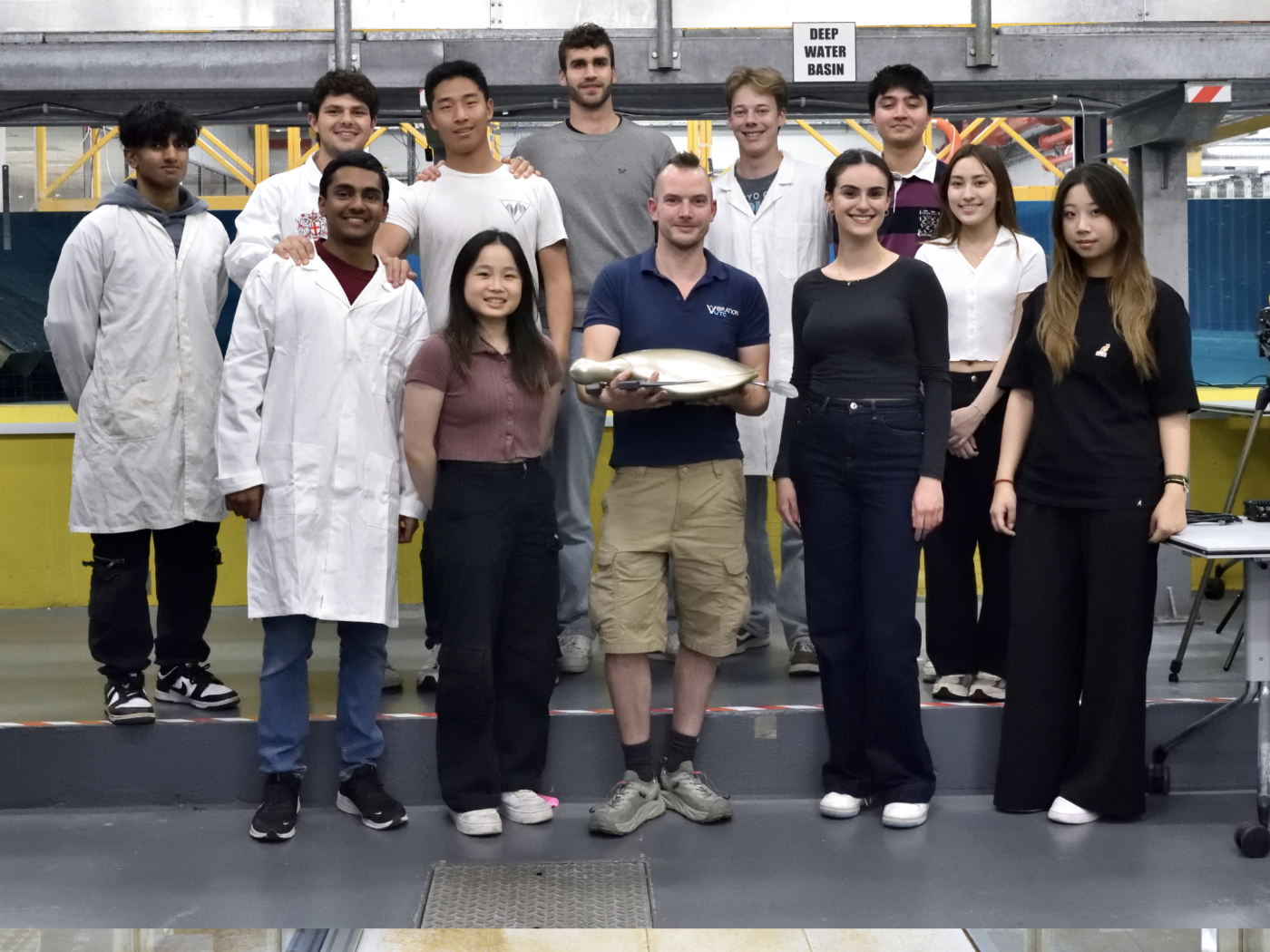
Designed and built by eight third-year Mechanical Engineering students at Imperial College London under Luke’s supervision, Shelly is engineered to reproduce real turtle-like swimming as faithfully as possible. She features realistic flipper morphology and biologically informed kinematics, driven through a highly mechanical power-transmission system that prioritises repeatable, measurable motion. The goal is simple but demanding: if Shelly can be tuned to match the swimming performance of real sea turtles—speed, efficiency, stroke timing, and flow behaviour—then the same modelling approach applied to a robotic plesiosaur can be treated with far greater confidence.
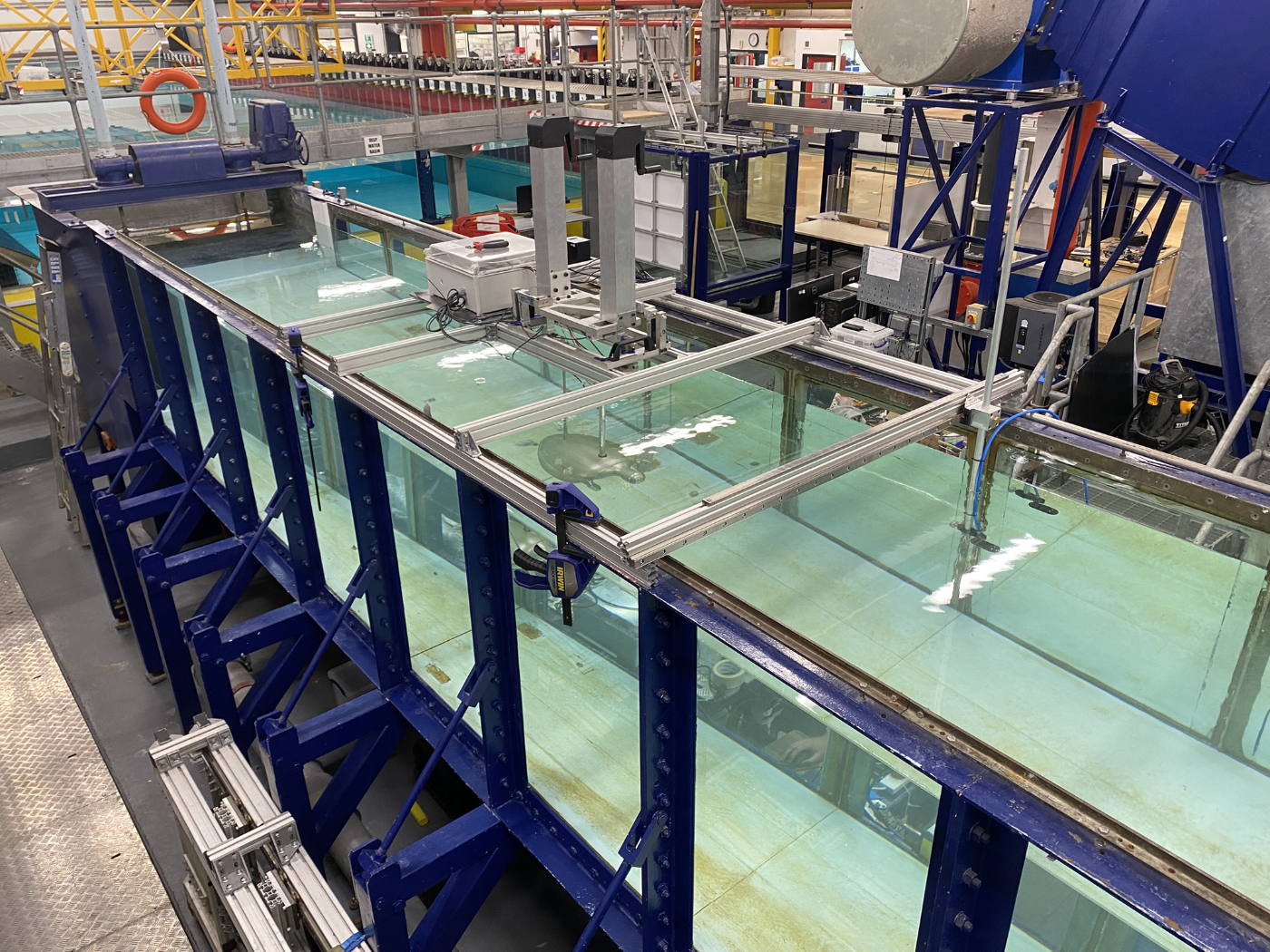
A hall-effect encoder system closes the loop between sensing and motion, allowing the active pitch of Shelly’s flippers to be precisely synchronised with the robot’s mechanical heave. This coordination matters, because underwater flight depends on subtle phase relationships between flipper angle and flapping velocity - small timing changes can mean the difference between thrust and drag. As part of the project, another four students built a force measurement system to enable measuerment of the thrust and drag forces on the robot. This was installed on the flume tank in the hydrodynamics lab at Imperial, and was used for the final testing and analysis of the robot. The work is ongoing, but initial results are promising. Beyond the lab, Shelly also has a second purpose: sea turtles are endangered, and her realism makes her a compelling outreach platform to open up a conversation about climate change and ocean conservation.
Beyond the lab, Shelly also has a second purpose: sea turtles are endangered, and her realism makes her a compelling outreach platform to open up a conversation about climate change and ocean conservation.
Keywords: Sea turtles, biomechanics, fluid mechanics, bioinspired design